In the world of commercial fleet monitoring, video quality and storage efficiency are everything. Whether it’s a logistics truck, a public bus, or a taxi fleet, every vehicle generates massive amounts of video data daily. Traditional compression formats like H.264 have served the industry for years, but today’s high-definition cameras—and the demand for longer recording time—require more advanced solutions.
This is where H.265 (HEVC) becomes the new standard.
Below, we break down the key differences between H.265 and H.264, and why upgrading to H.265 Mobile DVR systems makes a measurable impact on performance, cost, and reliability.
What Is H.264?
H.264, also known as AVC (Advanced Video Coding), has long been the most widely used video compression standard. It provides reasonable compression efficiency and is compatible with almost all devices and MDVR systems.
However, it starts to struggle as video resolutions increase—especially with 1080P, 4MP, and 4K footage.
What Is H.265?
H.265, also known as HEVC (High Efficiency Video Coding), is the next-generation compression algorithm. It is designed specifically to handle high-resolution video while reducing file size by up to 50% compared to H.264.
It is currently the most advanced and efficient format for fleet monitoring applications.
H.265 vs. H.264: Key Advantages
1. Up to 50% Storage Savings
This is the biggest difference.
H.265 reduces video file size by up to half while maintaining the same image quality.
For fleets recording 24/7, this means:
Longer retention time
Smaller hard drives or SSD requirements
Lower storage costs
Faster downloads and backups
In mobile DVR systems where storage is limited, this is a major upgrade.
2. Clearer and Smoother 1080P & 4K Video
H.264 struggles with:
Fast motion (vehicles, pedestrians)
Low-light environments
Complex details (traffic scenes, rain, night scenarios)
H.265 handles these much better thanks to:
Improved motion compensation
Advanced noise reduction
More efficient encoding blocks
This results in cleaner, sharper video, essential for evidence review and incident analysis.
3. Better Network Transmission for 4G/5G Remote Monitoring
Fleet operators increasingly rely on real-time remote viewing through 4G/5G.
H.265 enhances this experience by:
Reducing bandwidth consumption
Lowering network load
Delivering smoother live video
Even in areas with poor coverage, H.265 streams more reliably than H.264.
4. Greater Efficiency in Multi-Channel MDVR Systems
Modern MDVRs often support:
4 channels
8 channels
12 channels
16 channels
With more cameras recording simultaneously, H.265’s higher efficiency ensures:
Reduced CPU load
Lower storage pressure
More stable system performance
This makes H.265 ideal for large commercial fleets.
5. Ideal for High-Definition Cameras and Dual-Lens Systems
Today’s vehicle cameras include:
1080P AHD cameras
180° dual-lens cameras
IR night-vision cameras
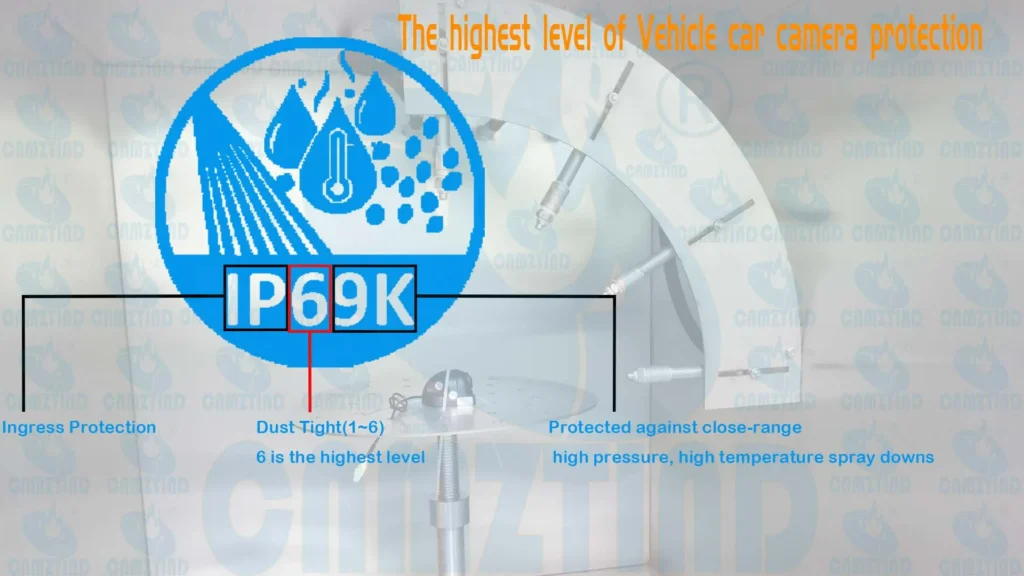
IP69K rugged cameras
Rear-view mirror cameras
These produce significantly more data than older analog cameras.
H.265 ensures that high-quality footage does not overwhelm your storage or network.
Comparison Summary: H.265 vs. H.264
| Feature | H.265 (HEVC) | H.264 (AVC) |
|---|---|---|
| Compression Efficiency | High (50% smaller) | Medium |
| Network Bandwidth | Lower required | Higher |
| Image Quality | Clearer, better in motion & low light | Good but outdated |
| Ideal for | 1080P / 4K / Dual Cameras | 720P / Basic systems |
| Storage Requirement | Very low | Higher |
| Remote Viewing Quality | Smooth & stable | Can lag or pixelate |
Why H.265 Is the Future of Mobile DVR Technology
As fleet safety grows more important, vehicles require:
Higher-resolution cameras
Longer storage time
Reliable 4G/5G remote live monitoring
Evidence-quality video
H.264 simply cannot meet all modern demands.
H.265 delivers more clarity, more efficiency, and more reliability—making it the ideal choice for next-generation MDVR systems.
CNMZTIND’s full line of H.265 1080P and 4K Mobile DVRs ensures that fleets stay ahead with:
Industrial-grade hardware
Patented shockproof and one-click HDD/SSD removable structures
Global reliability
Conclusion
If your fleet is still using H.264-based recorders, upgrading to H.265 MDVR systems can significantly improve storage efficiency, reduce data costs, and enhance video quality.
For fleets, integrators, and distributors looking to modernize vehicle surveillance—H.265 is not just an upgrade, it’s the new standard.